
Enterprise Drones in 2026: Matrice 4E vs Matrice 4T Comparison
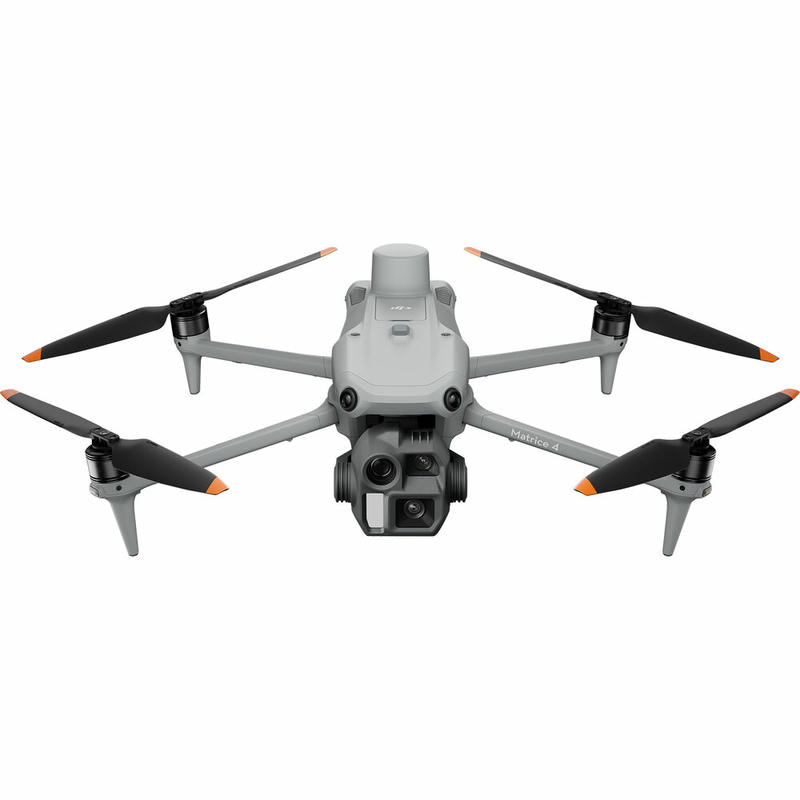
DJI's compact enterprise lineup has expanded with two specialized models — the Matrice 4E and the Matrice 4T — each designed for distinct operational requirements. While both share the same robust airframe and flight platform, their sensor configurations target different professional workflows. Choosing between them requires understanding your primary mission profile and the data you need to capture. This head-to-head comparison breaks down every meaningful difference to help you make the right investment decision.
Camera Systems: Visual vs Thermal
The Matrice 4E is the visual-focused variant. It carries a high-resolution wide-angle camera with a 4/3 CMOS sensor capable of 56MP stills and 4K/60fps video, paired with a 56× hybrid zoom lens that combines optical and digital magnification. This makes the 4E ideal for detailed visual inspections where resolution and zoom reach determine mission success — think power line component identification from 100 meters away, cell tower equipment audits, and facade inspections on high-rise buildings where every crack and corrosion spot must be documented in sharp detail.
The Matrice 4T adds a radiometric thermal camera alongside the visual sensors. The uncooled VOx microbolometer delivers 640×512 thermal resolution with a thermal sensitivity (NETD) of less than 30 mK, detecting temperature differentials as small as 0.03°C. This enables the 4T to identify overheating electrical connections, insulation failures, water leaks beneath surfaces, and even the body heat of missing persons in search and rescue scenarios. A laser rangefinder accurate to ±0.2 meters at 1200 meters completes the 4T's sensor suite, enabling precise distance measurement to points of interest during inspection workflows.
Flight Performance Comparison
Both models share the same flight platform, ensuring consistent handling regardless of sensor configuration. Maximum flight time is 42 minutes for the 4E and 38 minutes for the slightly heavier 4T. Both achieve a maximum speed of 20 m/s and resist winds up to Level 6 (39–49 km/h). The operating temperature range is -20°C to 50°C, with IP55 ingress protection against rain and dust. The DJI O4 Enterprise transmission provides a 20 km control range with 1080p/30fps live video on both models.
Omnidirectional obstacle sensing using binocular vision and infrared ToF sensors is standard on both variants. The Advanced Pilot Assistance System (APAS 5.0) enables intelligent obstacle avoidance during both manual flight and automated waypoint missions, while the integrated ADS-B receiver alerts pilots to nearby manned aircraft for enhanced airspace safety.
Software and Data Processing
Both models integrate with DJI FlightHub 2 for fleet management, mission planning, and real-time collaboration. The 4T adds DJI Thermal Analysis Tool 3.0, which processes thermal data on-device to deliver instant temperature readings, spot measurements, area analysis, and isotherm highlighting during flight. This means thermal inspection results are available immediately in the field rather than requiring post-flight processing on a computer — a significant time saver for utility crews and building inspectors who need actionable data on-site.
For photogrammetry and 3D mapping workflows, both models support DJI Terra for 2D orthomosaic and 3D model generation. The 4E's higher-resolution sensor produces more detailed visual models, while the 4T enables thermal-overlaid 3D maps that combine spatial geometry with temperature data — invaluable for solar farm inspection, roof analysis, and industrial plant monitoring.
Which Model Should You Choose?
Choose the Matrice 4E if your primary missions involve visual documentation, photogrammetry mapping, high-zoom inspections, or any workflow where image resolution and detail are the priority. The 4E excels in construction progress monitoring, telecom tower inspection, insurance assessment, and precision mapping.
Choose the Matrice 4T if you need thermal detection capabilities alongside visual imaging. The 4T is essential for electrical infrastructure inspection, search and rescue operations, firefighting support, building energy audits, and any application where temperature data reveals conditions invisible to the naked eye.
Not sure which model fits your organization? Contact DJI-ELITE for a personalized consultation. Our enterprise team will analyze your workflow requirements and recommend the optimal configuration, including accessory packages and software licensing.