
Agricultural Drone Market 2026: DJI AGRAS Dominates Global Sales
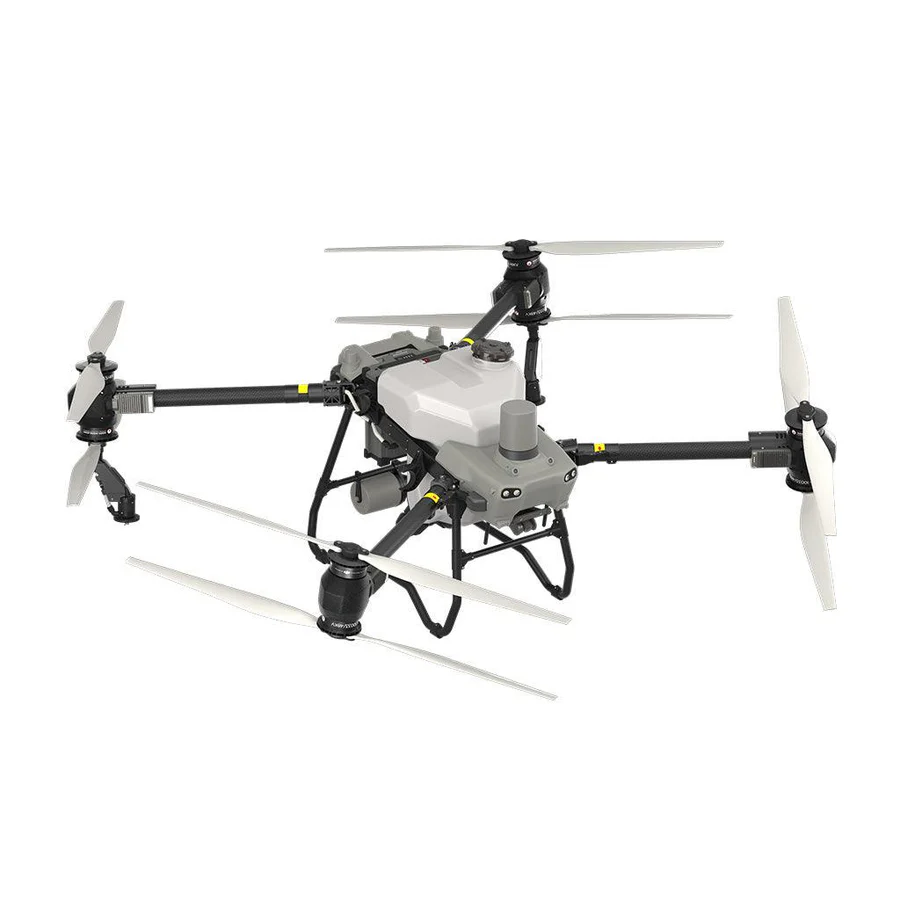
The global agricultural drone market has reached a pivotal milestone in 2026, with industry analysts estimating the total addressable market at $14.2 billion — a 34% increase from the previous year. At the center of this explosive growth, DJI's AGRAS series maintains a commanding position, with new market data from multiple research firms confirming that the brand controls over 70% of agricultural drone sales worldwide. The AGRAS T50, in particular, has emerged as the single best-selling agricultural drone model globally, outselling its nearest competitor by a factor of four.
Regional Market Breakdown
Asia-Pacific continues to lead agricultural drone adoption, accounting for 58% of global unit sales. China remains the largest single market, with over 200,000 AGRAS units sold in 2025 alone, treating an estimated 180 million hectares of farmland. Japan and South Korea have achieved near-complete drone integration in rice paddy management, with over 90% of commercial rice farms using aerial application for at least one crop cycle per year.
The fastest-growing regions are Southeast Asia, South America, and Sub-Saharan Africa. Brazil's agricultural drone market expanded by 67% in 2025, driven by soybean, coffee, and sugarcane operations adopting the AGRAS T50 and T100 for pest management and foliar nutrition. In Africa, government-funded drone agriculture programs in Kenya, Nigeria, Ghana, and Tanzania have distributed over 5,000 AGRAS units to smallholder farming cooperatives, with measurable yield improvements averaging 15–22% in treated areas compared to traditional methods.
Why AGRAS Dominates: Technology and Ecosystem
DJI's market leadership in agricultural drones stems from more than hardware quality — it is the result of a comprehensive ecosystem approach. The AGRAS T50 combines a 40-liter spray tank, 7-meter spray width, and intelligent terrain-following with sub-second response time. But what truly differentiates DJI is the software layer: the DJI Smart Agriculture platform integrates satellite imagery analysis, AI-powered prescription mapping, fleet coordination, and operational record-keeping into a unified workflow that competitors have yet to match.
The dealer and service network is equally critical. DJI has established over 2,000 authorized agricultural service centers across 40 countries, providing local training, maintenance, spare parts, and technical support. This physical presence in farming communities — rather than relying solely on online sales — builds trust and enables hands-on demonstrations that convert skeptical farmers into adopters. The DJI Agricultural Service Platform also connects drone operators with farm owners who need spraying services, creating a marketplace that drives utilization rates and operator income.
Economic Impact and ROI Data
Independent studies conducted across multiple crop types and regions consistently show positive return on investment for AGRAS adoption. For typical operations covering 500+ hectares annually, the payback period for an AGRAS T50 investment is 8–14 months. Water usage for spraying decreases by 90% compared to ground equipment, pesticide consumption drops by 20–30%, and labor requirements fall by 60–80%. In regions with labor shortages, the drone's ability to replace 30–40 manual laborers per unit is its most compelling value proposition.
Crop yield improvements are documented at 8–18% across rice, wheat, cotton, soybean, and fruit crops, attributable to more timely application, more uniform coverage, and reduced crop damage from eliminating heavy ground equipment passes through fields. For high-value crops like grapes, strawberries, and coffee, the yield and quality improvements push ROI payback periods down to as little as 4 months.
Looking Ahead: Market Projections for 2027–2030
Industry analysts project the global agricultural drone market will reach $28 billion by 2030, with compound annual growth of 18.5%. Key growth drivers include increasing food demand from population growth, climate change pressures requiring more precise resource management, labor shortages in developed agricultural economies, and expanding government subsidy programs that reduce adoption costs for farmers. DJI's continued investment in AI, autonomy, and swarm operations positions the AGRAS series to maintain its leadership as the market scales.
Whether you are a large agricultural enterprise or a drone service provider entering the agricultural sector, the AGRAS platform offers proven ROI and unmatched ecosystem support. Contact DJI-ELITE for fleet pricing, financing options, and custom deployment plans for your region and crop type.