
DJI Air 3S with LiDAR: The Best Mid-Range Drone for Night Photography
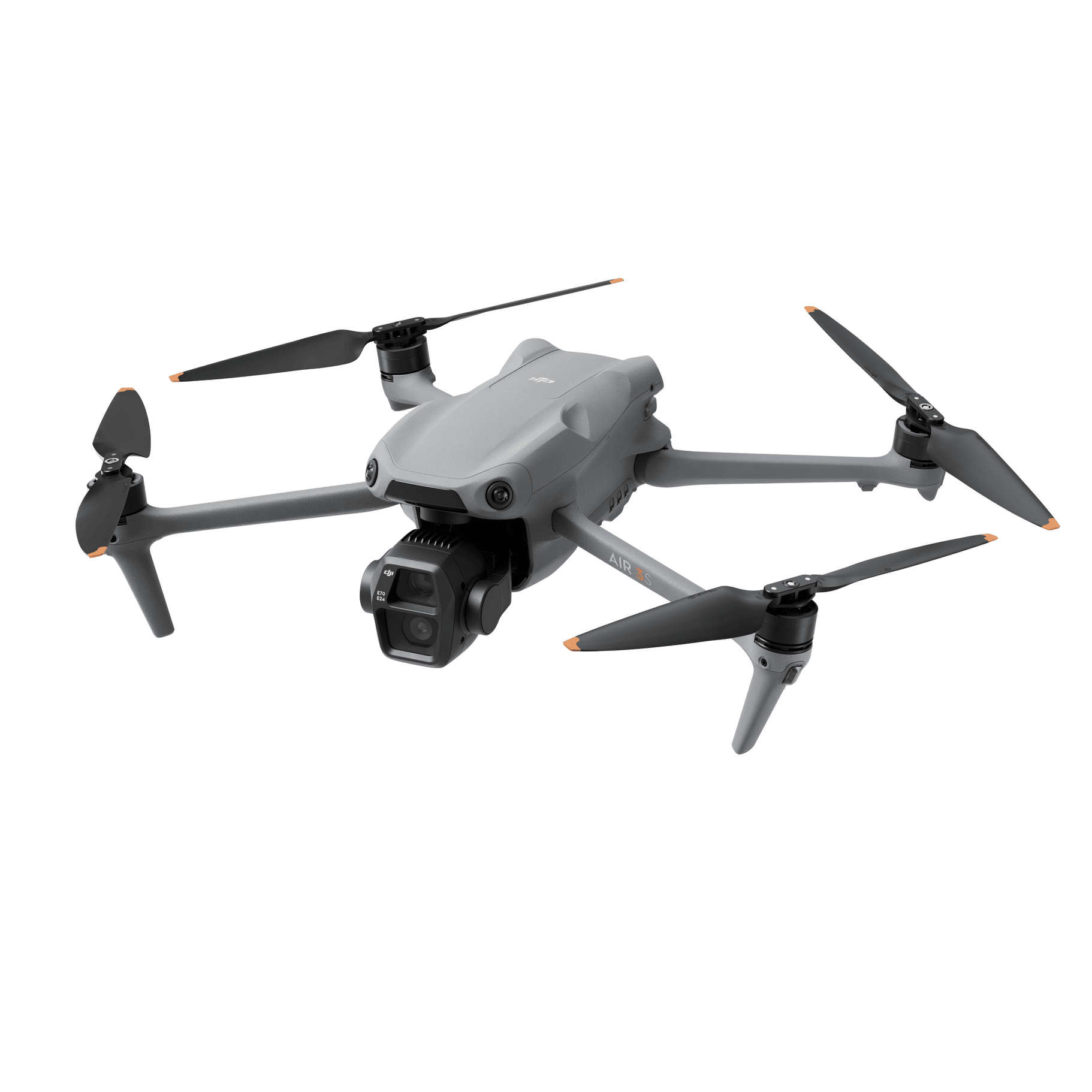
Night aerial photography has long been the domain of expensive, heavy platforms with large sensors and specialized equipment. The DJI Air 3S changes that equation dramatically by integrating LiDAR-assisted autofocus into a mid-range drone for the first time, combining it with an enhanced dual-camera system optimized for low-light performance. The result is a drone that opens up nighttime creativity to photographers who previously had to pack their gear away at sunset.
LiDAR Autofocus: Sharp Images in Complete Darkness
The most significant innovation in the Air 3S is its downward-facing LiDAR module repurposed for autofocus assistance. Traditional contrast-detect and phase-detect autofocus systems struggle in low light because they require visible texture and contrast to lock focus — exactly what nighttime scenes lack. The Air 3S's LiDAR emits infrared laser pulses that measure distance to the subject with millimeter precision regardless of ambient light levels, providing the autofocus system with instant, reliable distance data.
In practical terms, this means the Air 3S achieves accurate focus lock in under 0.3 seconds even in complete darkness — a task where previous drones would hunt endlessly or require manual focus adjustment. City skyline shots, illuminated landmarks, moonlit landscapes, and astrophotography compositions all benefit from this technology. The LiDAR focus system operates at ranges from 1 meter to infinity, covering the full range of distances encountered in aerial photography.
Dual-Camera Night Mode
The Air 3S carries two cameras: a primary wide-angle lens with a 1-inch sensor (f/1.7 aperture, 50MP) and a 3x medium telephoto (f/2.8 aperture, 48MP). Both sensors feature DJI's NightSense technology, a computational photography pipeline that stacks multiple exposures, applies AI-powered noise reduction, and intelligently merges frames to produce clean images at high ISO values.
In our testing, the primary camera delivered usable 50MP stills at ISO 3200 with noise levels comparable to what the previous Air 3 produced at ISO 800 — a two-stop improvement in effective low-light capability. The telephoto lens performs similarly well, enabling nighttime detail shots of illuminated architectural features, bridge structures, and urban elements from safe distances. Night Hyperlapse mode captures time-lapse sequences of city traffic, starfield rotations, and moonrises with automatic exposure ramping that smoothly transitions through changing light conditions.
Obstacle Avoidance in the Dark
Night flying presents unique safety challenges since visual obstacle detection sensors lose effectiveness in darkness. The Air 3S addresses this with its omnidirectional obstacle sensing system that combines binocular vision with active infrared illumination. The infrared system floods the surrounding area with invisible light pulses that the sensors use to detect obstacles at distances up to 25 meters in complete darkness — enough margin for safe navigation at the reduced speeds appropriate for nighttime operation.
APAS 5.0 remains fully functional during night flights, automatically routing the drone around detected obstacles during automated flight modes. The Return to Home function uses the LiDAR altimeter for precise landing zone detection, ensuring safe touchdowns on the takeoff point even when visual references are unavailable.
Specifications Highlight
The Air 3S delivers a 42-minute maximum flight time, a DJI O4 transmission range of 20 km with 1080p/60fps live feed, and omnidirectional obstacle sensing. Maximum wind resistance is Level 5, and the operating temperature range is -10°C to 40°C. Weighing 720 grams, it maintains the portable form factor that defines the Air series. Video capabilities include 4K/120fps, 4K HDR, and 10-bit D-Log M on both cameras, with internal recording to a microSD card up to 512GB.
The DJI Air 3S is the ideal companion for photographers and videographers who refuse to stop shooting when the sun goes down. Contact DJI-ELITE to order the Air 3S in Standard or Fly More Combo configurations, and ask about our nighttime aerial photography workshop for new owners.