DJI Mini 4 Pro vs Mini 3 Pro: Which Sub-250g Drone Is Right for You?
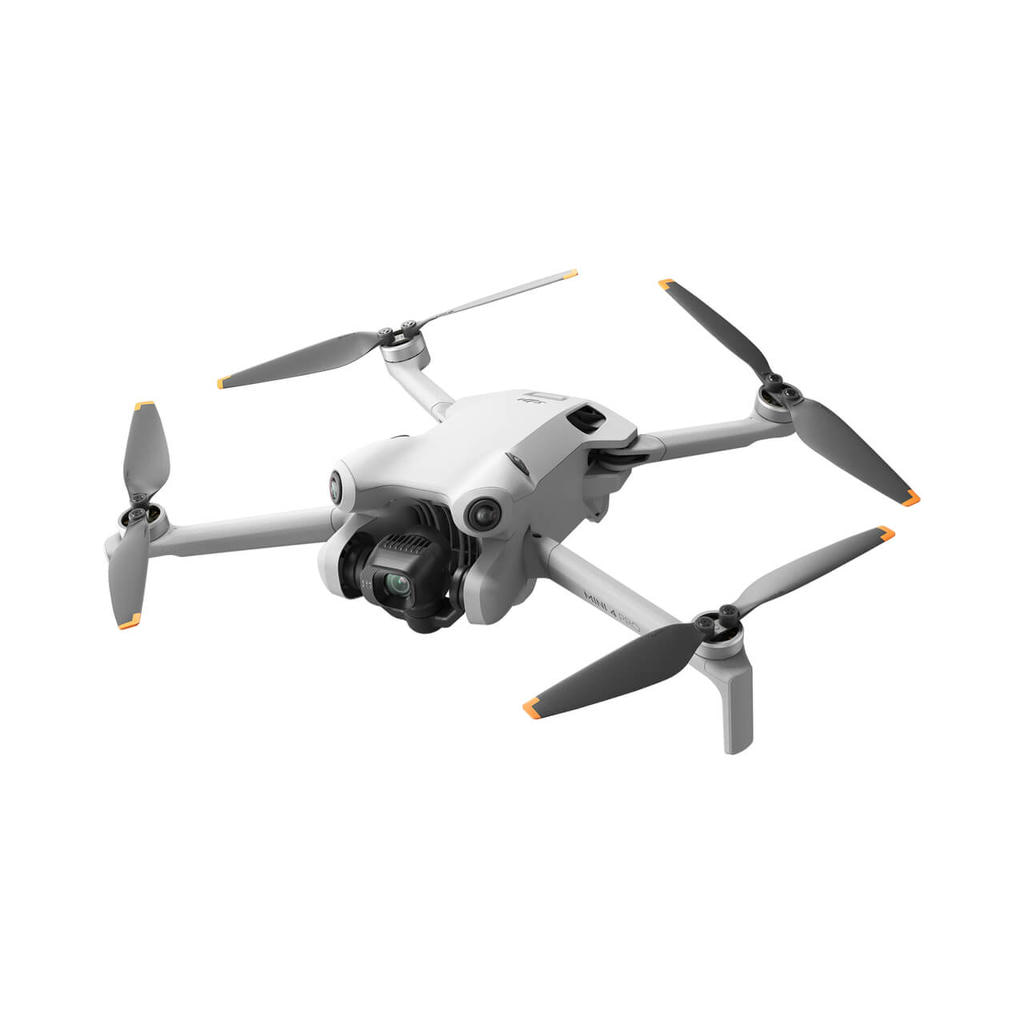
DJI's Mini Pro series has established itself as the go-to choice for pilots who want serious camera performance without the weight penalty that triggers drone registration requirements. With the Mini 4 Pro and Mini 3 Pro both available at different price points, choosing between them can be confusing. This detailed comparison examines every meaningful difference to help you make a confident decision based on your actual flying needs and budget.
Camera System: Evolution in Image Quality
The Mini 4 Pro carries a 1/1.3-inch CMOS sensor that captures 48MP stills and 4K video at up to 100fps, an upgrade from the Mini 3 Pro's 1/1.3-inch sensor with 48MP stills and 4K/60fps. While the sensor sizes are identical, the Mini 4 Pro benefits from an updated image processing pipeline that delivers improved dynamic range (measured at 13.1 stops versus 12.6 stops), better noise performance above ISO 800, and more accurate auto-white balance in mixed lighting conditions.
The Mini 4 Pro also introduces 4K HDR video recording — a feature absent on the Mini 3 Pro — which captures highlight and shadow detail simultaneously for scenes with extreme contrast like sunrise, sunset, and backlit subjects. The slow-motion capability at 4K/100fps versus 4K/60fps gives the Mini 4 Pro a clear advantage for content creators who use slow-motion effects frequently. Both drones support 10-bit D-Log M color profiles for maximum post-production flexibility, and both feature true vertical shooting mode for portrait-orientation content optimized for social media platforms.
Obstacle Avoidance: A Generation Gap
This is where the Mini 4 Pro establishes its most significant advantage. The Mini 4 Pro features omnidirectional obstacle sensing — covering forward, backward, upward, downward, and both lateral directions — using a combination of binocular vision and infrared Time-of-Flight sensors. This means the drone detects and avoids obstacles from every angle, enabling APAS 5.0 intelligent path planning during automated flight modes.
The Mini 3 Pro provides tri-directional sensing only, covering forward, backward, and downward directions. The lateral and upward blind spots mean the drone cannot detect obstacles to its sides or above it — a limitation that becomes apparent during orbit shots around structures, sideways tracking movements, and flights near overhead obstacles like tree canopies and building overhangs. For pilots who frequently fly in complex environments, the Mini 4 Pro's omnidirectional coverage provides a meaningful safety advantage.
Transmission and Range
The Mini 4 Pro uses DJI's O4 transmission system, delivering 1080p/60fps live feed at distances up to 20 kilometers. The Mini 3 Pro uses the older O3 system with 1080p/30fps feed at up to 12 kilometers. In practice, the O4 system provides noticeably smoother live video, faster response to control inputs, and more reliable connections in environments with radio interference such as urban areas and event venues. The extended range is relevant not just for distance but for signal reliability — a stronger link at moderate distances means fewer video dropouts and more consistent flight performance.
Flight Time and Performance
The Mini 4 Pro achieves a maximum flight time of 34 minutes on its standard Intelligent Flight Battery, extending to 45 minutes with the optional Intelligent Flight Battery Plus (which pushes the takeoff weight slightly above 249g). The Mini 3 Pro delivers 34 minutes on its standard battery and 47 minutes with its Plus battery. Flight time is effectively a tie between the two models, with both offering class-leading endurance for sub-250g platforms.
Both drones weigh under 249 grams with their standard batteries, resist winds up to Level 5, and operate in temperatures from -10°C to 40°C. Maximum speed is 16 m/s for both models in Sport mode. The Mini 4 Pro adds ActiveTrack 5.0 with APAS, while the Mini 3 Pro offers ActiveTrack with forward/backward avoidance only.
Verdict: Which Should You Choose?
Choose the Mini 4 Pro if you want the safest, most capable sub-250g drone available. The omnidirectional obstacle sensing, O4 transmission, 4K HDR video, and 4K/100fps slow motion represent genuine upgrades that enhance both safety and creative capability. It is the better choice for pilots who fly in complex environments, need reliable transmission in urban settings, or want the most future-proof Mini investment.
Choose the Mini 3 Pro if you are budget-conscious and primarily fly in open environments where the lateral obstacle sensing gap is less critical. The Mini 3 Pro remains an excellent camera drone with matched image quality for daylight shooting and identical flight time. It represents outstanding value, especially at its current reduced pricing.
Still weighing your options? Contact DJI-ELITE for side-by-side demonstrations, competitive pricing on both models, and personalized recommendations based on how and where you fly.